

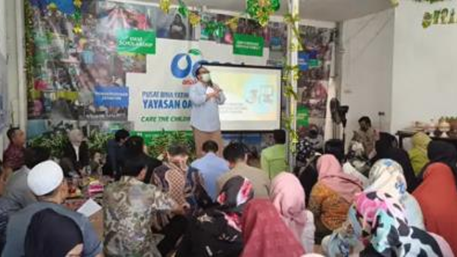
In September, 2024, the Community Service Team of Universitas YARSI, supported by funding from the Ministry of Education, Culture, Research and Technology, implemented a capacity building program for the Warung Sejahtera Business Group consisting of 30 micro-entrepreneurs in culinary, fashion, and handicraft sectors in Tanjung Priok, North Jakarta. This initiative was driven by challenges faced by the business group, including limited access to business capital for production, lack of knowledge and digital skills in business development, and restricted access to broader markets. The program employed the Participatory Action Research (PAR) method that actively involved all partner members in every activity stage, from socialization, training, technology implementation, mentoring, to evaluation. The series of activities included establishing the digital platform digitalisasi-umkm.com as a digital transformation information channel, conducting Point of Sales (POS) and digital financial management training attended by 35 participants on August 9, 2024, at Oase Anak Bangsa Foundation Office, establishing a Nazir Institution certified by the Indonesian Waqf Board (BWI) with number 3.3.00457, waqf crowdfunding training, partnership exploration with SatuWakaf Indonesia platform resulting in an MoU, establishing a mini-studio for podcasts and product photography, and digitalization mentoring for three partner MSMEs (Chicken Bang Yadi, Rhyzvana Craft, and Kuns Store) with business website creation, social media, and digital marketing advertising. Program results demonstrated significant improvement with an average increase in participants’ understanding of capital access by 53.17% based on pre-test and post-test scores, a 10% increase in understanding of POS and digital financial management, and a 10-15% increase in sales turnover for MSMEs participating in digitalization mentoring.
The Warung Sejahtera Business Group Capacity Building Program aligns with the achievement of Sustainable Development Goals (SDGs) across several key points: Goal 1: No Poverty by providing alternative business capital access through waqf crowdfunding innovation that does not burden MSME actors with interest or margins, and increasing income through digital transformation that expands market reach; Goal 8: Decent Work and Economic Growth by empowering 30 micro-entrepreneurs in Tanjung Priok through digital skills training, financial management, and online marketing that increases their capacity to compete in the digital era and create sustainable businesses; Goal 10: Reduced Inequalities by enhancing MSME capacity to level up through digital transformation so they can compete with large companies, providing equal access to technology and digital information through the digitalisasi-umkm.com platform; and Goal 17: Partnerships for the Goals through strategic collaboration among higher education institutions (Universitas YARSI), the Ministry of Education, digital platforms (SatuWakaf Indonesia), Indonesian Waqf Board (BWI), Oase Anak Bangsa Foundation, and sub-district government and Tanjung Priok community in creating an inclusive and sustainable digital economic empowerment ecosystem based on Islamic social finance.
