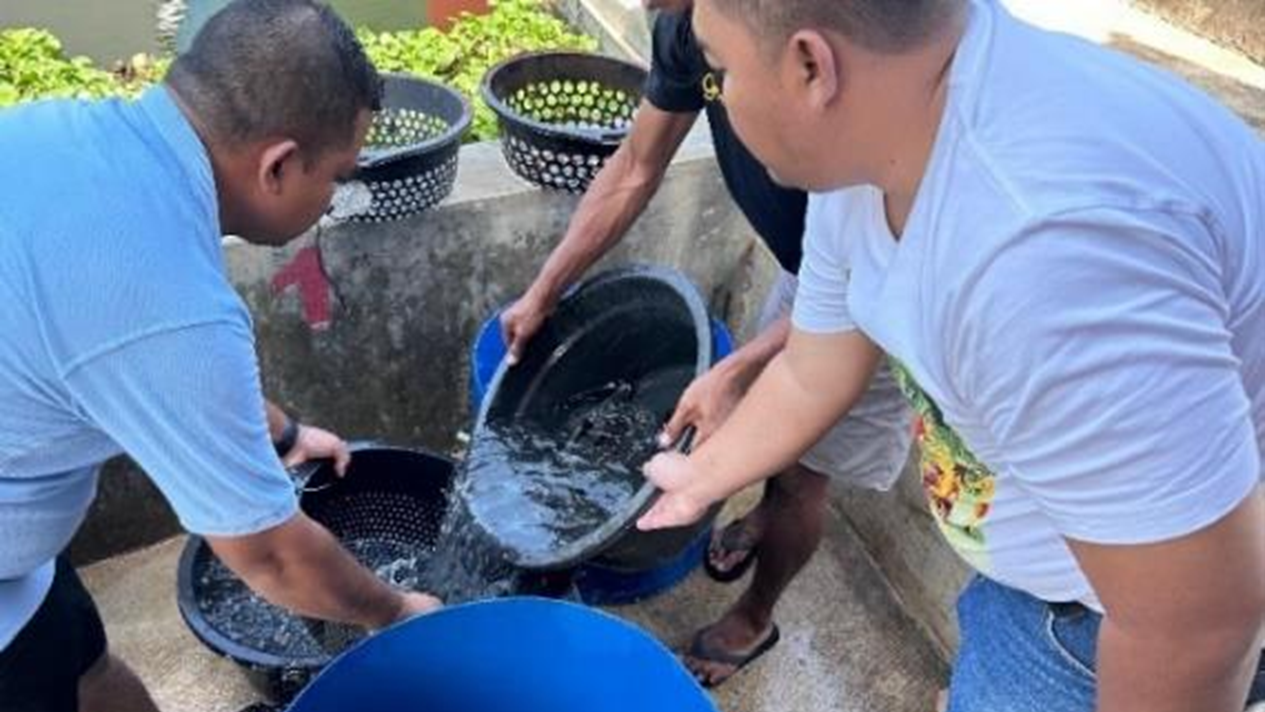


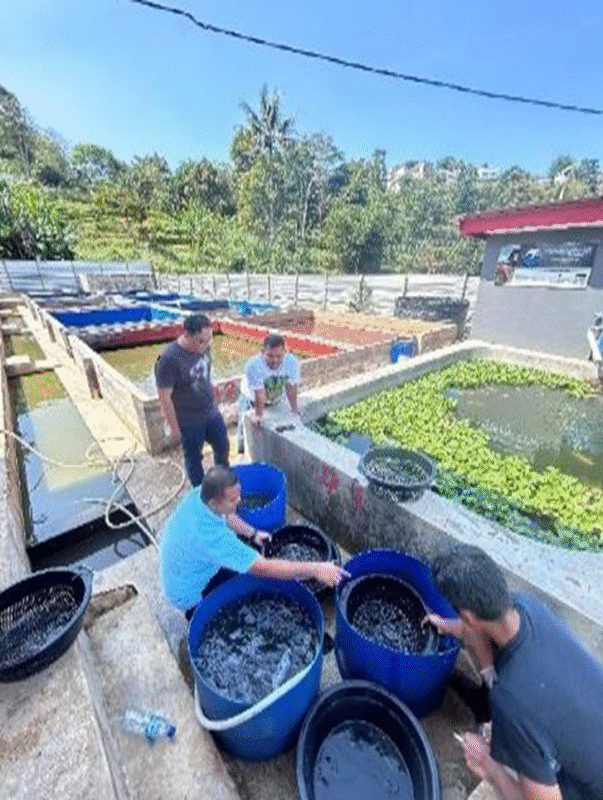
In December, 2024, the Community Service Team from Universitas YARSI and Universitas Krisnadwipayana implemented an empowerment program for POKDAKAN (Fish Farmers Group) NaminaSang Farm & Co, a business unit of BUMDes Mandalamekar, located in Mandalamekar Village, Cimenyan District, Bandung Regency, West Java. This initiative was driven by various challenges faced by the catfish farming group, including limited capital, difficulty in determining selling prices and business profits, absence of financial reports, marketing constraints limited to middlemen at low prices (60% of market price), and minimal product variation resulting in low added value and turnover. The program employed methods of socialization, intensive training, technology application, field mentoring, and continuous evaluation encompassing four main focuses: catfish cultivation training using the 6M method (preparing ponds, testing water, sorting seeds, regulating feed, selecting culls, monitoring and harvesting), financial management and cost of goods sold calculation training, social media-based marketing training, and zero waste-based product differentiation training by creating processed products such as catfish nuggets, catfish meatballs, catfish dim sum, catfish floss, catfish skin crackers, catfish sticks, and liquid fertilizer from catfish waste. Program results demonstrated significant improvement with a 35% increase in participant understanding based on pre-test and post-test scores, up to 10% increase in product selling prices, up to 15% increase in turnover, and a 20-30% increase in harvest percentage through implementation of improved cultivation methods.
The POKDAKAN BUMDes Mandalamekar empowerment program aligns with the achievement of Sustainable Development Goals (SDGs) across several key points: Goal 1: No Poverty by providing access to zakat-based capital and business management training to increase income for ultra-micro entrepreneurs in the fisheries sector; Goal 2: Zero Hunger through processed catfish products rich in protein, calcium, and phosphorus as a solution for Supplementary Feeding Programs (PMT) to prevent stunting among toddlers in Mandalamekar Village; Goal 8: Decent Work and Economic Growth by empowering fish farmer groups and youth organizations as agents of change creating sustainable business opportunities; Goal 12: Responsible Consumption and Production through implementation of zero waste principles in product differentiation that processes all parts of catfish including waste into economically valuable products such as skin crackers and liquid fertilizer, thereby reducing waste and environmental pollution; and Goal 17: Partnerships for the Goals through strategic collaboration among higher education institutions (Universitas YARSI and Universitas Krisnadwipayana), BUMDes, village government, and communities in creating a sustainable and environmentally friendly green economy empowerment ecosystem.