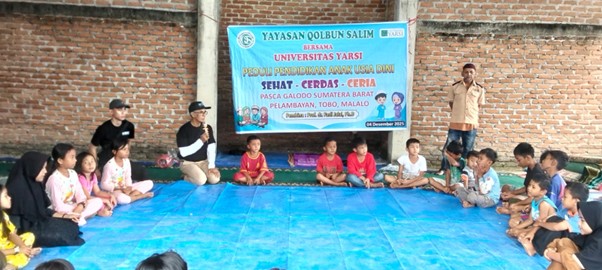


Universitas YARSI, in collaboration with Yayasan Qolbun Salim Jakarta, deployed a specialized Trauma Healing Team to Palembayan, Agam Regency, West Sumatra in early December 2025 to provide critical psychological support specifically for children affected by the disaster. This initiative addresses the urgent need for child-focused mental health intervention, recognizing that children are among the most vulnerable populations during and after natural disasters, facing unique psychological challenges that differ significantly from adult trauma responses. Children who experience disasters are at high risk of developing acute stress reactions, separation anxiety, regression in developmental milestones, sleep disturbances, behavioral changes, nightmares, and long-term conditions such as post-traumatic stress disorder (PTSD) that can profoundly impact their emotional development, academic performance, and overall life trajectory. Unlike adults, children often lack the cognitive and emotional tools to process traumatic experiences, making professional intervention essential for healthy recovery. The trauma healing team comprises trained child psychologists, counselors, and mental health professionals equipped with age-appropriate therapeutic approaches including play therapy, art therapy, storytelling, group activities, and expressive techniques designed to help children process their emotions, regain a sense of safety, rebuild trust, and develop coping mechanisms. By partnering with Yayasan Qolbun Salim Jakarta, Universitas YARSI ensures comprehensive psychosocial support tailored to children’s developmental stages, creating safe spaces where young survivors can express their fears and begin healing.
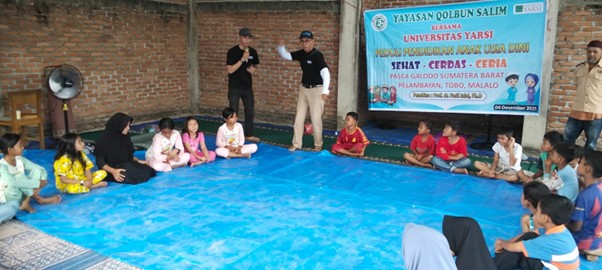
This child-focused trauma healing initiative directly supports Sustainable Development Goal 3 on Good Health and Well-being, which emphasizes ensuring healthy lives and promoting well-being for all at all ages, with particular importance for children whose mental health foundations during formative years determine lifelong outcomes. specifically addresses promoting mental health and well-being, which is critically important for disaster-affected children who, without proper intervention, may carry psychological scars into adulthood affecting their education, relationships, and productivity. Early psychological intervention helps prevent the development of chronic mental health conditions, supports healthy emotional development, and enables children to return to normal routines including schooling—essential for breaking cycles of poverty and trauma. This initiative also strongly aligns with SDG 4 on Quality Education, as addressing children’s trauma is prerequisite for their ability to re-engage with learning; traumatized children cannot focus on education when consumed by fear, grief, and psychological distress. Furthermore, the program supports SDG 17 on Partnerships for the Goals through effective collaboration between academic institutions and civil society organizations, and SDG 11 on Sustainable Cities and Communities by investing in the psychological resilience of the next generation who will rebuild their communities. Through this child-centered psychosocial intervention, Universitas YARSI demonstrates that true disaster recovery requires protecting children’s mental health, recognizing that investing in children’s psychological well-being is investing in Indonesia’s future, ultimately advancing the nation’s commitment to ensuring that no child is left behind in times of crisis and that all children can grow into healthy, productive citizens capable of contributing to their communities.