
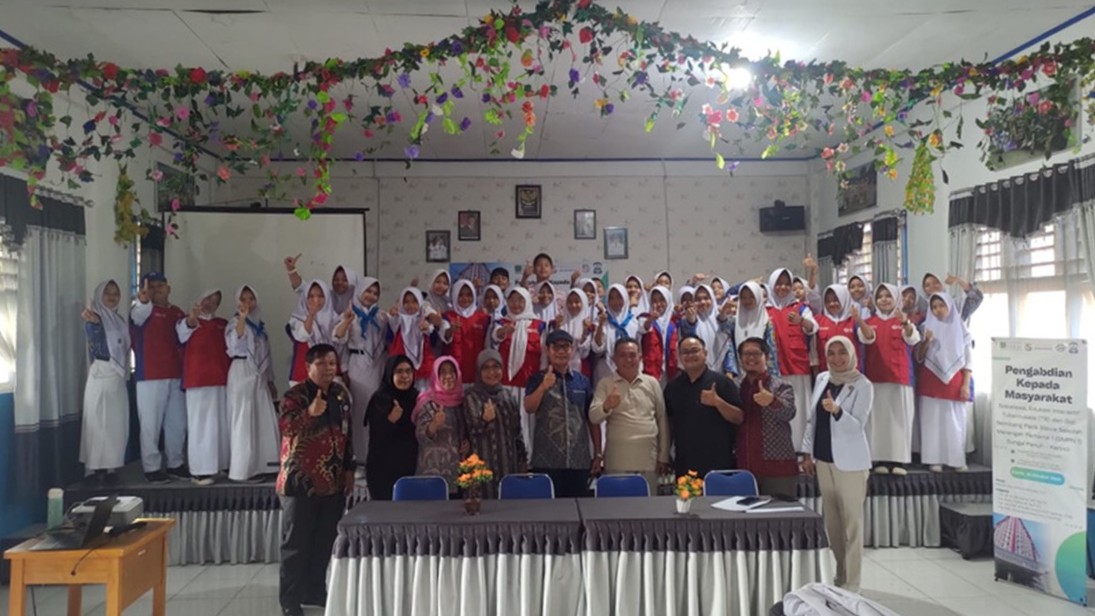
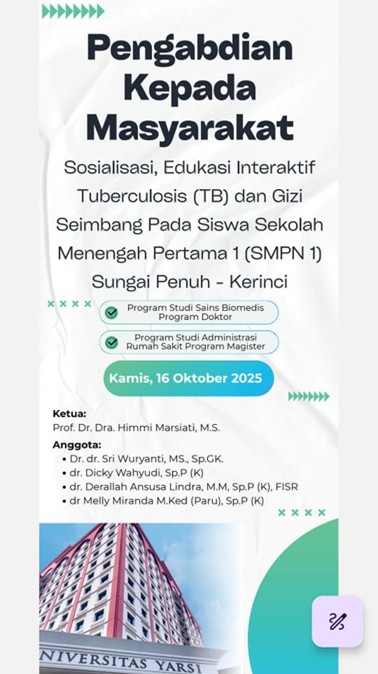
On Thursday, October 16, 2025, the Doctoral Program in Biomedical Sciences and Master’s Program in Hospital Administration at Universitas YARSI conducted a Community Service activity with the theme “Socialization of Interactive Education on Tuberculosis (TB) and Balanced Nutrition for Students at SMPN 1 Sungai Penuh-Kerinci.” This initiative was driven by the urgent need to address tuberculosis prevention among adolescents and promote proper nutrition awareness in school-age children, particularly in regions where TB cases and malnutrition remain prevalent health concerns. The activity was led by Prof. Dr. Dra. Himmi Marsiati, M.S. as the program coordinator, with a team of expert speakers including Dr. dr. Sri Wuryanti, MS., Sc.G.K., dr. Dicky Wahyudi, Sp.P (K), dr. Deralilah Amusa Lindra, M.M, Sp.P (K), FISR, and Molly Miranda M.Ked (Paru), Sp.P (K). The implementation method involved interactive socialization sessions combining health education presentations, question-and-answer discussions, and practical demonstrations to ensure students gained comprehensive understanding of TB transmission, prevention strategies, early symptom recognition, and the importance of balanced nutrition for strengthening immunity and overall health.
 This community service activity aligns significantly with the Sustainable Development Goals (SDGs), particularly Goal 3 on Good Health and Well-being, which aims to ensure healthy lives and promote well-being for all at all ages. By focusing on tuberculosis education, the program directly addresses communicable diseases, including efforts to end the TB epidemic by 2030. Furthermore, this initiative contributes to SDG Goal 2 on Zero Hunger through nutrition education that helps students understand proper dietary practices essential for growth and disease prevention. By targeting school-age children, this program invests in building a healthier generation equipped with knowledge to make informed health decisions, ultimately supporting Indonesia’s efforts toward universal health coverage and creating sustainable health promotion systems within educational institutions that can serve as models for broader community health interventions.
