
In August 2026, Universitas YARSI initiated a comprehensive transformation of a public facility (fasum) land of approximately 500 square meters in Cluster Nusantara, Tangerang, which was previously abandoned and served as a garbage dump, into a circular economy ecosystem integrating environmental management, community empowerment, technology, and economically valuable product development. The program, initiated by Dr. Juniarti (Faculty of Medicine Lecturer and Master of Biomedical Science Program Instructor at Universitas YARSI) with support from Kemdiktisaintek Grant and Yayasan YARSI funding, represents the urgency of utilizing limited space to create multi-dimensional positive impact for both environment and community. The land was organized into a productive garden equipped with basic infrastructure and herbal plants, then developed into an organic waste processing center involving sanitation workers from the Cluster Nusantara environment. Main activities include processing plant residue into liquid organic fertilizer (POC) through fermentation with EM4, processing fruit peels into eco-enzyme with a 3:1:10 ratio (fruit peel:molasse:water) harvested after three months of fermentation, and production of derivatives such as hand soap and floor cleaner. Additionally, the land integrates hydroponic system for plant propagation, tilapia fish pond, and an Internet of Things (IoT)-based garden irrigation system through collaboration with students from the Faculty of Information Technology, creating perfect synergy between environment, technology, education, and economics.
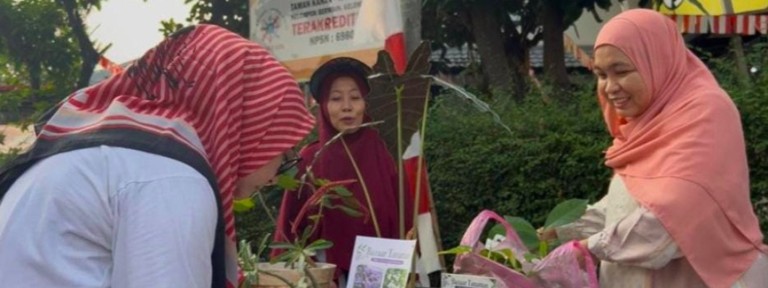
Universitas YARSI’s land transformation program emphasizes the urgency of building a sustainable circular economy model that not only generates economically valuable products but also empowers local communities and maintains environmental sustainability. Generated products—compost, POC, eco-enzyme, hand soap, floor cleaner, and medicinal and ornamental plants have been introduced to the community through Merdeka Bazaar and will expand marketing through social media and Universitas YARSI’s Herbal Research Center website currently under preparation, opening sustainable economic opportunities for the local community. The initiative supports the achievement of Sustainable Development Goals (SDGs) Goal 8: Decent Work and Economic Growth through empowerment of sanitation workers and creation of organic product-based business opportunities, Goal 11: Sustainable Cities and Communities by transforming abandoned land into productive green space improving urban environmental quality, Goal 12: Responsible Consumption and Production through implementation of circular economy processing organic waste into high-value products, Goal 13: Climate Action through waste reduction and increased urban greening, and Goal 17: Partnerships for the Goals through collaboration among higher education institutions, local communities, various faculties (Medicine, Information Technology), and other stakeholders in building inclusive sustainable development models. Through this initiative, Universitas YARSI demonstrates its concrete commitment to translating academic knowledge into concrete action benefiting environment, community, and local economy sustainably.
